What the closing statement said
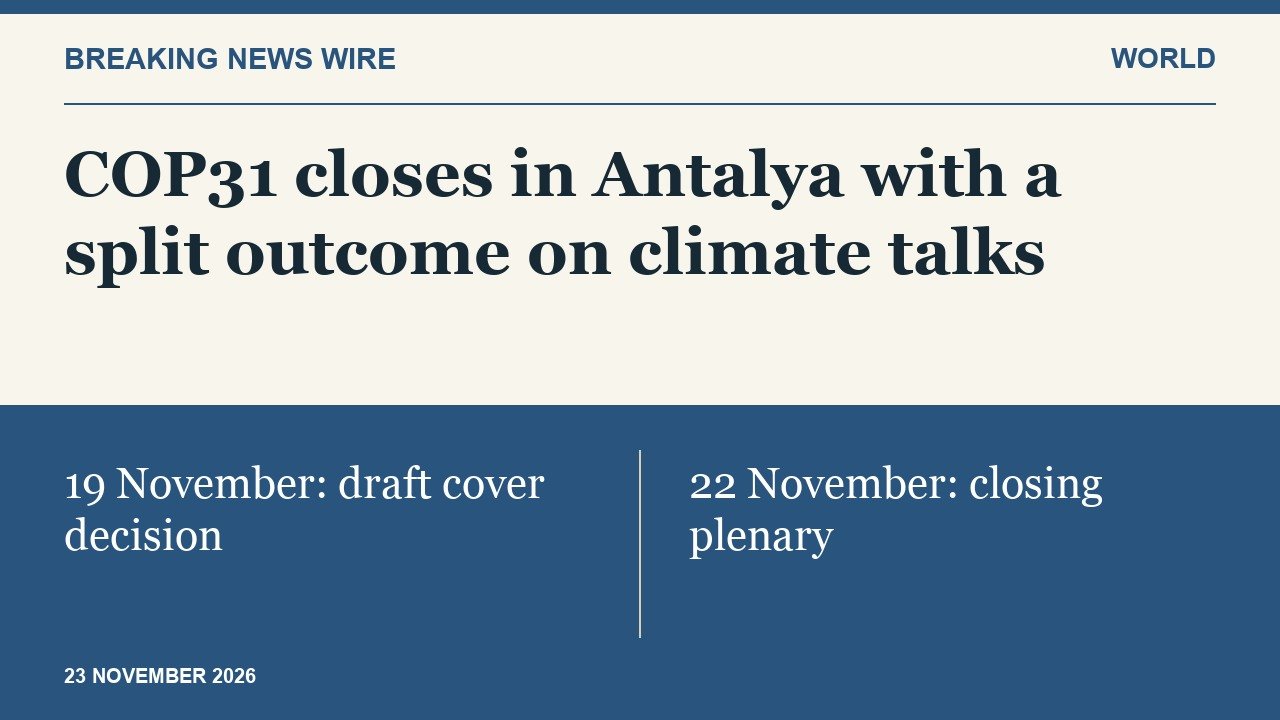
COP31 ended in Antalya on 22 November with governments unable to agree on issues covered by two presidency-led decisions, UN climate chief Simon Stiell told the closing plenary. He also reported progress on other negotiating decisions, including a just transition. The distinction matters when a headline about the stalled talks sits alongside a separate announcement of progress at the same summit.
Reading a draft against a final decision
On 19 November Stiell had pointed delegates to a new draft cover decision. That document showed what negotiators were considering at the time. The closing statement, delivered three days later, records what remained unresolved. When tracing a claim about an agreement, readers can check the document date and whether its author calls it a draft or an adopted decision.
A second stream of announcements
The summit also had an Action Agenda. Stiell cited an electrification package and work on agriculture, cities and infrastructure under that track. Individual governments can announce initiatives there while formal negotiations among the parties remain unresolved. For readers following the effect on India, the next question for any pledge is who made it, what they undertook to deliver and which official document sets out that undertaking.
Sources · UNFCCC closing plenary transcript, 22 November · UNFCCC press conference, 19 November