Why water enters a conversation about medicines
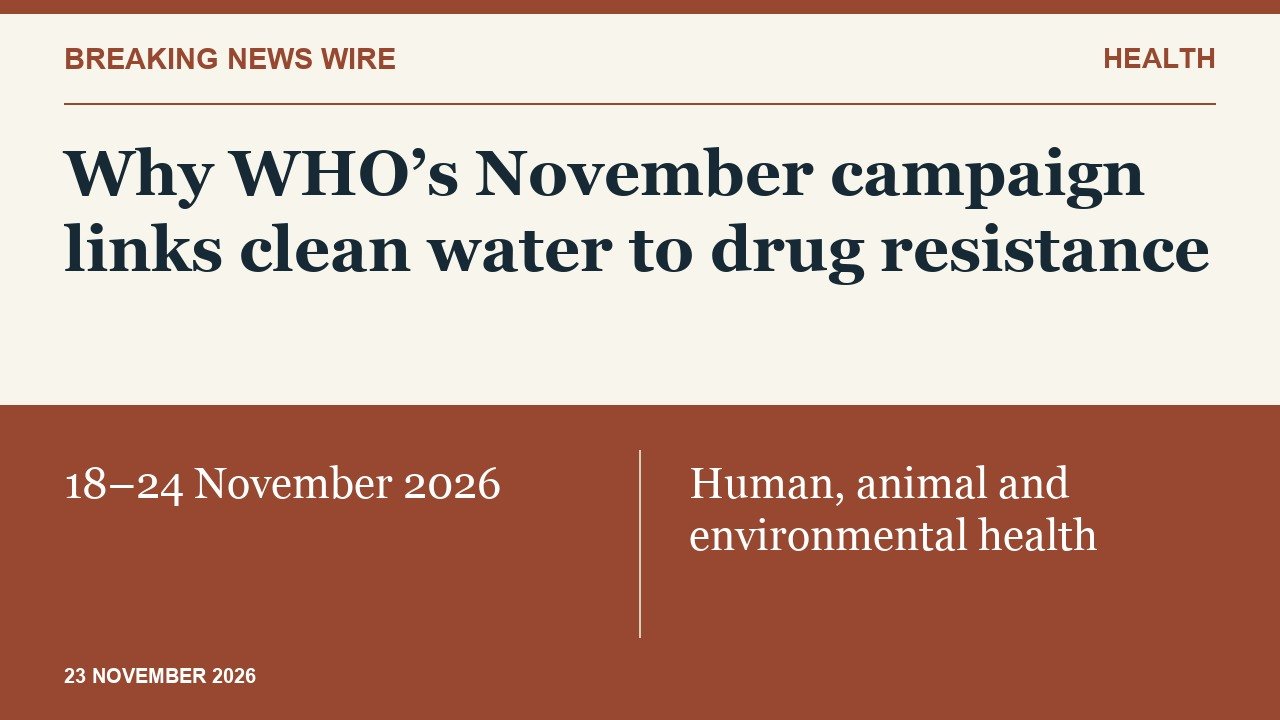
A community that prevents infections also reduces the occasions on which people need antimicrobial treatment. That connection helps explain a feature of this year’s World AMR Awareness Week: the World Health Organization places sanitation, vaccination and environmental protection alongside responsible medicine use. The annual campaign runs from 18 to 24 November.
What becomes resistant
Resistance develops in microbes. When a medicine loses activity against a particular microbe, an infection it once treated can become harder to clear. Antibiotics target bacteria. The broader term antimicrobial resistance also covers loss of effectiveness of treatments against certain viruses, fungi and parasites. The distinction matters when interpreting a headline about a newly resistant infection: the organism and the drug involved both matter.
Why the campaign involves more than hospitals
WHO developed the campaign guide with the international bodies responsible for agriculture, animal health and the environment. A hospital can focus on avoiding infections and using diagnostics. A water authority can improve sanitation. Veterinary and agricultural services have their own roles in the handling of medicines. WHO India’s July review connects this shared approach to India’s national action plan. These organisations work on different parts of the same problem: keeping effective treatment available when an infection does occur.
Sources · WHO’s 2026 campaign guide · WHO India AMR review · WHO event and dates